Accessibility Tools

Provider in Focus | Fife Council Meals on Wheels

Discussion took place on 8th May 2026

This month, we’re speaking with Andrew Stokes, Service Manager at Fife Council, about delivering one of Scotland’s largest Meals on Wheels services on behalf of the Fife Health and Social Care Partnership, and supporting over 600 customers a day across a large and diverse local authority area, the 3rd largest in Scotland.

Operating from three production kitchens across West, Central and East Fife, with a team of around 50 staff and an all-electric delivery fleet of around 30 bespoke vans, the service combines large-scale logistics with something much more personal: daily wellbeing checks, social connection, and support for people to remain independent at home.

A large-scale service rooted in community support

Fife Council’s Meals on Wheels service delivers approximately 600 meals and 150 afternoon teas per day, across 363 days a year.

The service supports a wide range of residents, although the majority are adults over pensionable age.

It might be people who’ve been in hospital for a period of time and they need that kind of short-term support… and often that short term support leads into them staying with us longer term because they like the service, the quality of food, that social interaction.

Unlike many services, all Meals on Wheels drivers in Fife are paid council employees.

We’re all public servants. We’re all paid to serve the residents and the people of Fife.

Andrew explains that this gives the service stability and continuity, with many drivers bringing significant life skills and experience and a strong sense of public service commitment to the role.
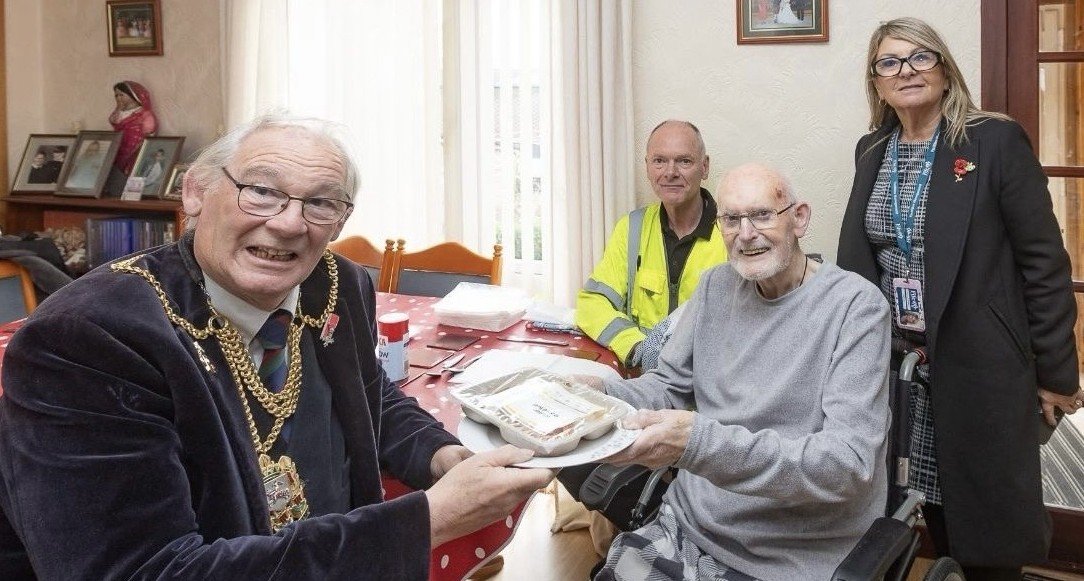
Provost of Fife, Cllr Jim Leishman (former player and manager of Dunfermline Athletic Football Club), delivering to a local Meals on Wheels client and fellow Dunfermline Athletic fan during the National Association of Care Catering (NACC) National Meals on Wheels Week

“If the Meals on Wheels service stopped in Fife today, what would those 600 customers do tomorrow? The majority of them wouldn’t be able to sustain themselves in their own home independently, having nutritious meals. Some of them may need to go into long term residential care. But that’s expensive and also there may not be the capacity for them to go in. And this places added pressure on social care finances… home care… they may not have the capacity either due to their own resource and recruitment challenges.” 

Image: Provost of Fife, Cllr Jim Leishman (former player and manager of Dunfermline Athletic Football Club), delivering to a local Meals on Wheels client and fellow Dunfermline Athletic fan during the National Association of Care Catering (NACC) National Meals on Wheels Week

More than delivering food

Although meals are central to the service, Andrew repeatedly returns to the wider role drivers play in people’s daily lives.

Drivers will identify concerns and escalate them where needed – whether to their supervisors, housing colleagues, social work teams, or emergency services. The service also provides reassurance to families, particularly those living far away.

Obviously, as we know, it’s much more than just a meal. It’s that welfare check, it’s that social contact, it’s having a wee blether between our Drivers and our clients.


It’s that sense of comfort for families… knowing that their relatives are getting nutritious food and that check and that social connection every day.

Andrew reflects that the true impact of Meals on Wheels may be impossible to fully measure:

It’s taken financial pressure off of very stretched health and social care budgets in terms of people remaining living independently in their own homes. But I still don’t think we actually know what it truly means to people and their families, because it’s very personal to them. We’ve got the generic evidence or assumptions or views, but I think there’ll be much more than that if we were to dig deeper.

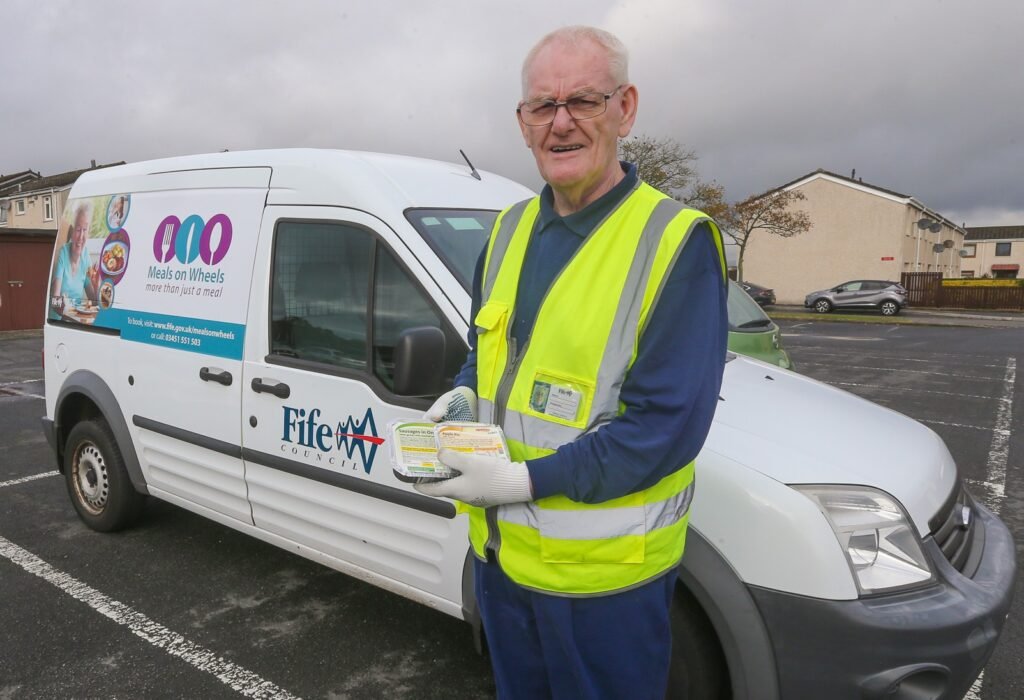
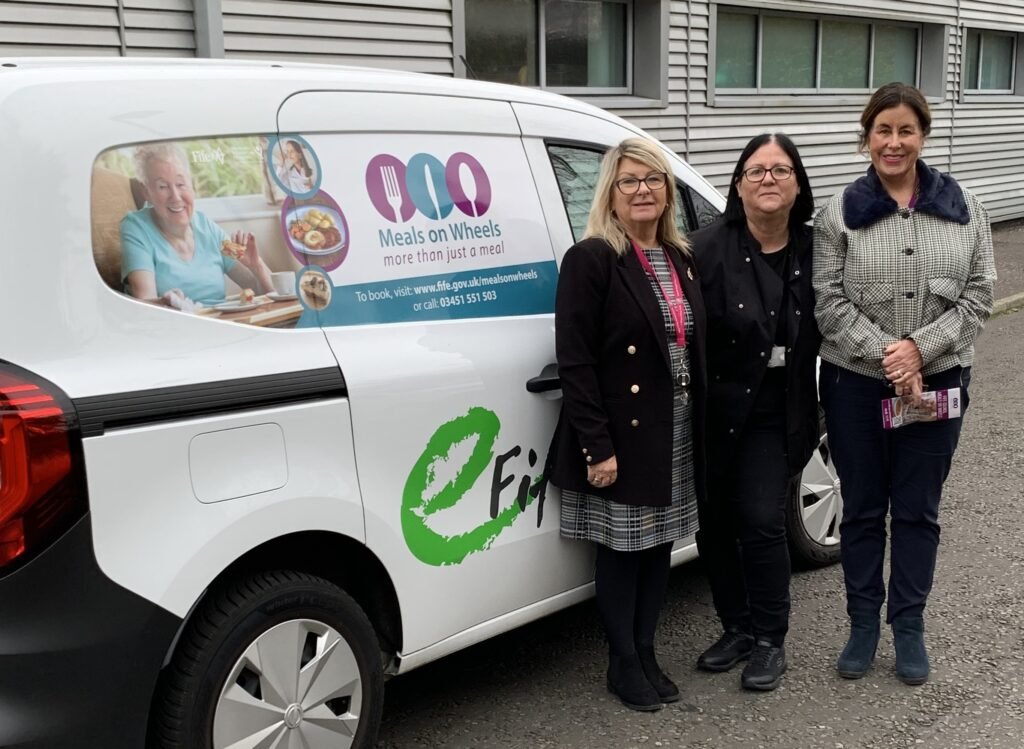
Alan, one of Fife's Meals on Wheels Drivers, proudly showing off his bespoke delivery van

Alan, one of Fife’s Meals on Wheels Drivers, preparing to deliver meals in the community and proudly showing off his bespoke delivery van
Reliability in all conditions

One of the strongest themes throughout our conversation is the determination and resilience of the Meals on Wheels team.

Fife regularly experiences severe winter weather, storms and difficult conditions – yet missed deliveries are extremely rare.

The Meals on Wheels drivers just see it as a challenge. I always phone my team manager and say, ‘How many missed deliveries?’, and she’ll say, ‘None.’ They were all delivered. Drivers just find a way.

Andrew believes this reflects both the commitment of the workforce and the culture within the service.

The thing that always strikes me about the Meals on Wheels team is just their passion and their own commitment to ensuring that our most elderly and vulnerable are supported and cared for.”

He also highlights the importance of investing in staff through training, supportive management, and strong employment conditions.

Every new driver receives a full induction covering: 

  • Safeguarding and adult protection
  • Vehicle safety
  • Council expectations and behaviours
  • Shadowing and route familiarisation


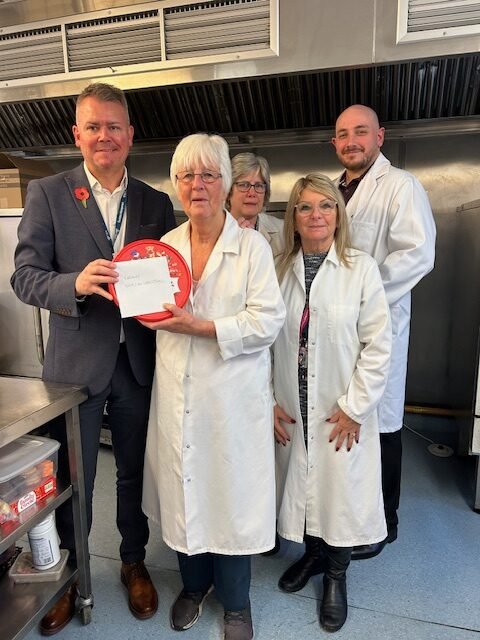
Andrew Stokes, Service Manager, and Stella Stewart, Hospitality Team Manager, delivering thank-you gifts to one of their local Meals on Wheels kitchens during last year’s National Association of Care Catering (NACC) National Meals on Wheels Week

Andrew Stokes, Service Manager, and Stella Stewart, Hospitality Team Manager, delivering thank-you gifts to one of their local Meals on Wheels kitchens during last year’s National Association of Care Catering (NACC) National Meals on Wheels Week

Adapting and evolving the service

The Fife Council Meals on Wheels service recently introduced a new digital management system to support route planning, delivery management and data collection.

Andrew explains that while technology offers opportunities, introducing change needs to be carefully managed:

We were mindful of the workforce that we’ve got and some of them are perhaps not all digitally confident. We didn’t want that to overwhelm the staff.

Instead, the team is gradually building confidence and exploring how data and digital tools could help strengthen the service in the future.

Andrew and his colleagues are also thinking more broadly about how Meals on Wheels may need to evolve over time.

To sustain it and modernise it, I think there is something around what else the service can offer.

This includes exploring wider wellbeing support, helping people remain active at home, and wider preventative approaches to ageing well.

Operational challenges and rising pressures

Like many providers, Fife Council’s service has faced increasing operational and financial pressures in recent years, including overheads, staffing and energy costs. 

“Fleet costs, obviously a massive cost to any Meals on Wheels provider. It was one of the big reasons we decided to go all electric. One, because of our climate change and net zero ambitions as an organisation, but also to reduce what is now hugely expensive fuel costs.”

Despite increases in food supply costs, the service currently operates with a significant public subsidy to ensure meals remain affordable for customers.

“If we were a commercial operation, you would look to offsetting costs by increasing the charges by up to 30%. This would make it unaffordable for many of our customers.”

One of the most significant operational challenges recently came following packaging changes introduced by their food supplier. The shift from foil trays to plastic CPET containers created issues around transport stability, heat retention, and delivery logistics.

“The team had to be really creative. We ended up wrapping some of the new plastic trays in foil. The workaround then becomes the norm. It doesn’t fix the issue… but people just find ways to keep things moving.”

Andrew credits the persistence of frontline staff for helping the service adapt while maintaining continuity for customers.

Why the service matters

Reflecting on the wider role of Meals on Wheels within health and social care, Andrew is clear about the consequences for hospital admissions and social care demand if services were not available.

Andrew also believes broader conversations are needed about access to nutritious food more generally. He reflects on the frustrations of trying to sustain and defend essential frontline Meals on Wheels services. 

There’s always typically a focus on school meals, which is a statutory responsibility. There’s additional funding that’s come in for school meals from the Scottish Government. But there’s a discussion around, ‘why should feeding elderly and vulnerable people, in their own homes, be any different?’. We need to be talking about feeding those in need across communities in general, whether it’s children and young people, whether it’s elderly, vulnerable people, whether it’s those families who at school holidays, their children don’t get access to school meals. Everybody has the right to good quality, nutritious, tasty food. 

For Andrew, Meals on Wheels is part of a much bigger issue around dignity, nutrition, loneliness, and community connection.

How do we reconnect communities around food?

Lynne Garvie, Director of Health & Social Care Partnership, meeting with Karen Lessels, Meals on Wheels Driver, and Stella Stewart, Hospitality Team Manager, at one of their local Meals on Wheels kitchens during the National Association of Care Catering (NACC) National Meals on Wheels Week

Lynne Garvie, Director of Health & Social Care Partnership, meeting with Karen Lessels, Meals on Wheels Driver, and Stella Stewart, Hospitality Team Manager, at one of their local Meals on Wheels kitchens during the National Association of Care Catering (NACC) National Meals on Wheels Week

Looking ahead

Andrew believes the future sustainability of Meals on Wheels will depend on innovation, collaboration, visibility, and evidencing the service’s value.

He stresses the importance of continuing to showcase the service and share evidence of impact.

There’s a challenge when you work in the public sector that you don’t always shout about or show off what you do, as it’s expected of us as public sector organisations. But the more that we can showcase the service and celebrate it and shine a light on it, the more it gets into focus. 

Andrew also reflects on the value of human connection, and the importance of having time to simply sit and talk.


If we had some more staff… The utopia would be for the drivers to be able to spend a little bit more time with the clients who would like and need a little bit more time.” 

Advice for other providers

For people considering developing a new Meals on Wheels service, Andrew advises: 

Focus on nutrition and social connection together. Meals on Wheels is not just about delivering food – it’s about supporting people to remain connected, independent, and well.

He also reflects on the importance of challenging misconceptions around who Meals on Wheels is for, and what modern services can offer. He believes there is still significant misunderstanding around eligibility, affordability, and the wider value of the service.

And if an existing Meals on Wheels provider came to Andrew for advice, he emphasises the importance of visible leadership:

“You need to be out there, you need to be speaking to people, you need to build up that trust, that confidence, that credibility. And use any influence that you might have, the connections that you’ve got, to support the service.”

He also stresses the importance of spending time within the service itself, to understand operational realities, workforce pressures, customer experience and frontline challenges:

“You need a real understanding of the issues, the challenges, and the people delivering the service before you start to manage the service.”

Andrew’s question to other Meals on Wheels providers

What does the future of Meals on Wheels look like? And how can we work together to ensure services remain sustainable and relevant in the years ahead?

This reflects one of the strongest themes throughout our discussion: not just how services operate today, but how the sector continues to evolve in response to changing communities, technologies and expectations.

Learn more about the Fife Council Meals on Wheels service
Contact: sw.enquiries@fife.gov.uk | 03451 551 503

Do you run a Meals on Wheels service and have thoughts or experience to share? Join the conversation with other Meals on Wheels providers via our WhatsApp Community.

Can you give us some feedback please?