Accessibility Tools

Provider in Focus | Fair Close Centre

Discussion took place on 30th April 2026

This month, we’re speaking with James Wilcox, Chief Executive of Age Concern Newbury, who run the Fair Close Centre, including a Meals on Wheels service operating in Newbury and Thatcham in West Berkshire.

Delivering freshly cooked meals six days a week to around 55 customers, the service combines a professional kitchen with a strong volunteer network. At its heart is something simple but powerful: food, connection, and care, delivered together.

Service Snapshot

Location: Newbury & Thatcham (West Berkshire)

Customers: ~55 many receiving meals daily

Delivery: 6 days a week, Saturday meal delivered on Friday

Team: 2 core staff + ~35 volunteers

Meals: Freshly cooked on site

“If Meals on Wheels didn’t exist, I think some people would go hungry and their families wouldn’t know about it… a lot of people would go into a care home sooner… And I think quite a lot of people would just find themselves getting out of the habit of eating. I don’t think anyone would be better. I think it’s a lifeline.” 

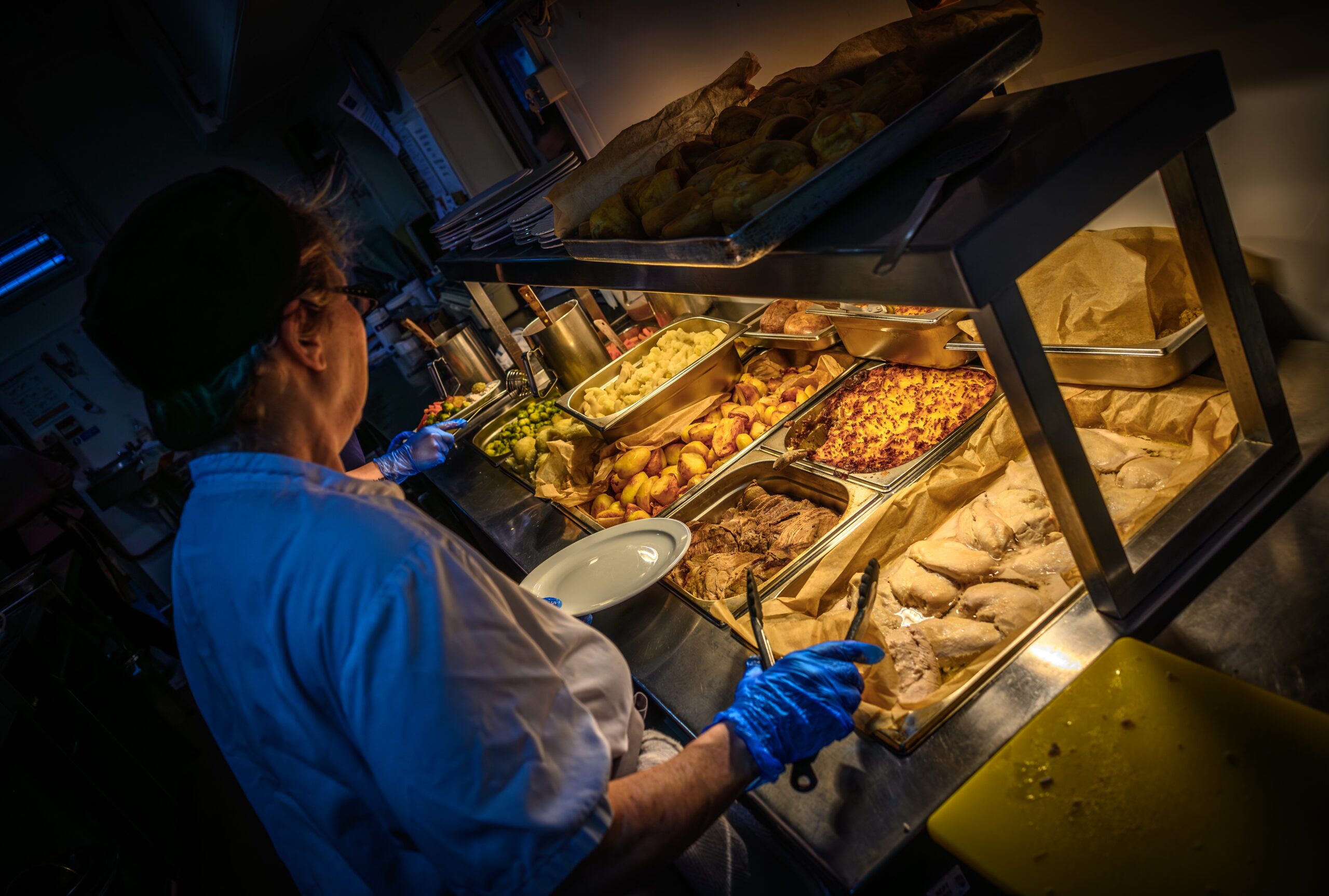
Image: Fair Close’s Kitchen

About the service

The Fair Close Centre supports mainly older adults living independently, often in their 80s, many of whom live alone. While meals are central, the service plays a wider role for both individuals and their families. 

As James explains, families are often the ones arranging support.

For those receiving the service, the impact is immediate. Feedback is often simple but telling: people are grateful, and over time, the service becomes part of their routine and wellbeing. 

“They want the reassurance to know that their parents are eating properly and that they eat every day.”

What makes this service different?

For James, two things set the Fair Close Meals on Wheels service apart: human connection and food quality.

“It’s not like an Uber delivery driver or a takeaway – it’s a DBS-checked volunteer, nearly always delivering to someone they know. So there’s a relationship.”

This relationship also brings an important safeguarding role, with volunteers able to notice changes or concerns. 

Alongside this, the service focuses on freshly cooked meals prepared on site:

“Being freshly cooked… the nutritional value over and above the microwave meal is something I want to emphasise. You can taste the difference.”
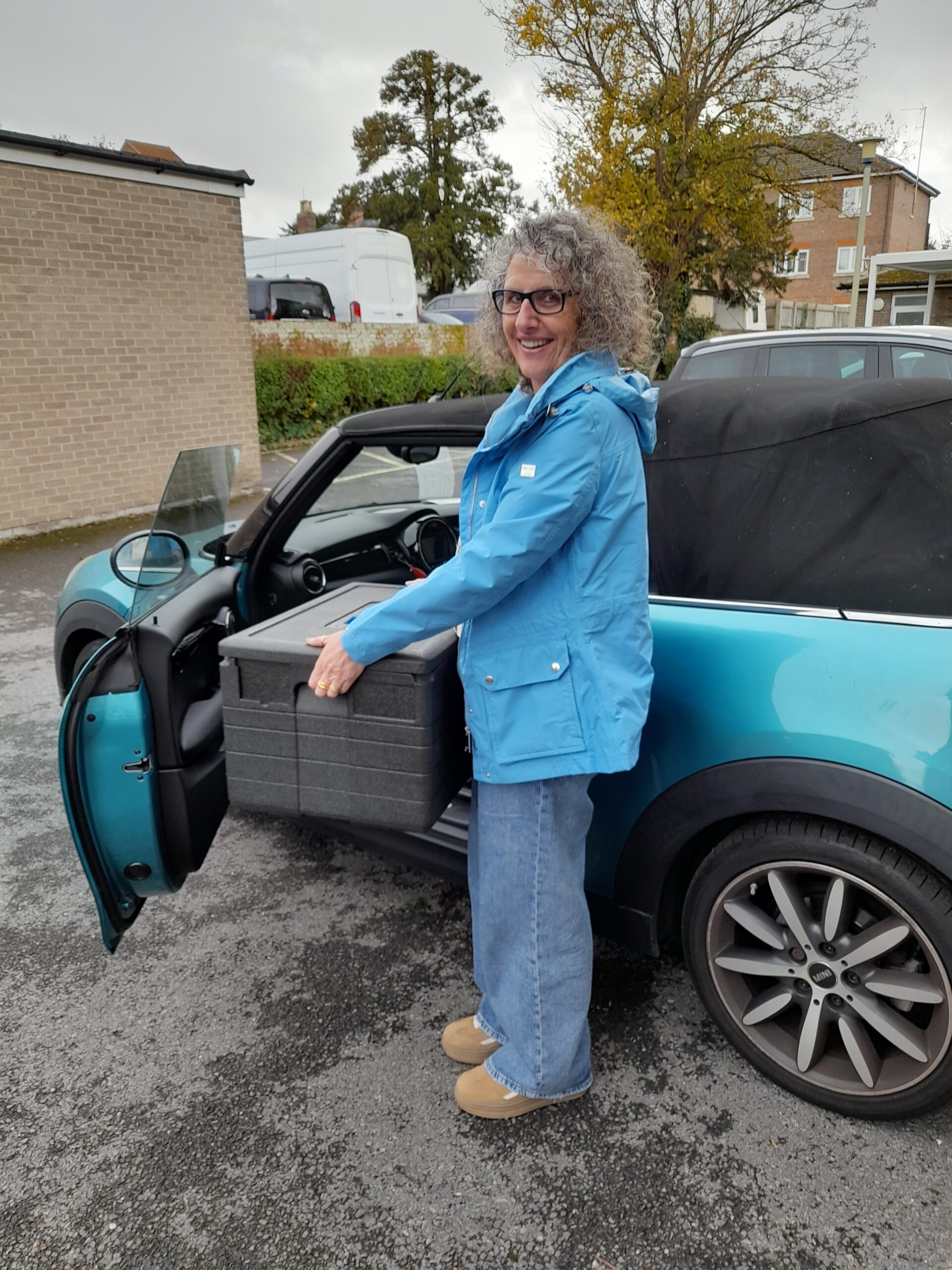
Preparing for the day’s Meals on Wheels deliveries at Fair Close

Preparing for the day’s Meals on Wheels deliveries at Fair Close

What’s working well in practice?

Freshly cooked meals at a manageable scale

The team has retained a model that allows them to cook on site while maintaining quality and flexibility

Strong volunteer network

Around 35 volunteers deliver meals, often building relationships with the people they support

Tight control of food costs

Despite rising prices, the service has maintained nutritional quality without compromising standards

Integrated systems

A CRM system linked to invoicing helps manage customer information, billing, and allergen tracking more efficiently

Challenges and reality

Like many services, Fair Close faces ongoing pressures – particularly around sustainability and demand.

Because they support older people, there is natural turnover, with individuals moving into care or experiencing declining health. This makes outreach and awareness an ongoing priority. 

James also highlights the importance of marketing – particularly reaching families, who often play a key role in decisions about care.

“There’s a constant need to find new customers.”

“The Meals on Wheels offer is not outdated. I think it needs to be promoted as freshly cooked food delivered by friendly people.”  

Looking ahead

Despite challenges, James is optimistic about the future and sees clear opportunities to grow. 

One key area is developing a home-from-hospital support offer, helping people recover at home and avoid readmission.

“There is real scope locally to develop a home-from-hospital package… we’d be helping more people who really need the help to get back on their feet so they don’t then relapse and go back into hospital.” 

The ambition is to grow from around 55 to 75-100 meals per day, while maintaining quality and connection. 

James also reflects more broadly on the future of Meals on Wheels:

“I believe in Meals on Wheels… it shouldn’t be seen as something outdated, but something that’s right for the next generation too.” 

Why it matters

For James, Meals on Wheels plays a crucial role in the wider health and care system. But this isn’t always fully recognised. 

“The virtue… the health benefits of Meals on Wheels come full circle over time. If decisions are just driven by cost, it misses the point, because nutrition and wellbeing contribute to the health economy… it needs to be much more holistic and think about the whole system.” 

He points to the need for stronger evidence to support decision-making: 

“We need the evidence and the data to make the case for change. The social value metrics and the economic metrics. And when that case is made, I think we’ll be able to grow Meals on Wheels across the country. I believe it’s possible.”

Working together as a sector

A recurring theme throughout our conversation was the importance of collaboration. 

“There’s every opportunity for us to be part of the Meals on Wheels community across the country. That’s what’s so refreshing about the Meals on Wheels UK project, is we’re not alone. We have a common purpose.” 

James is clear that sharing knowledge across Meals on Wheels providers is essential – from operational tools to approaches to scaling and partnerships.

“Learning about automation, learning about what others are doing, learning about how to scale, sharing data across a wider data set, all these things are great for all of us. And ultimately, we’ll be able to support more people, and better, collectively.”

He adds: 

“If we’re all prepared to share that knowledge… and we do see that we’re in it together as people across the country supporting an ageing population, I think there’s a lot to be learned. The Meals on Wheels proposition can grow across the country. To do that, we’ve got to work together.” 

This reflects a growing recognition that strengthening Meals on Wheels across the UK depends on learning from each other and working together.

Advice for other providers

For people considering developing a new Meals on Wheels service, James advises: 

“Plan it well – and go and talk to someone who’s done it.”

And if an existing Meals on Wheels service came to James for advice, he emphasises being open to learning: 

“Let me come and see you – I might learn something too.”

James’ question to other Meals on Wheels providers

“How have other providers convinced their local authorities to work with them to develop a home-from-hospital Meals on Wheels support package?”

Do you run a Meals on Wheels service and have thoughts or experience to share? Join the conversation with other Meals on Wheels providers via our WhatsApp Community

Learn more about the Fair Close Centre’s Meals on Wheels service: https://www.fairclosecentre.org/meals/#mealsonwheels   
Contact: ldavies@fairclosecentre.org | 01635 40488

Can you give us some feedback please?