Accessibility Tools

How to communicate the full value of Meals on Wheels

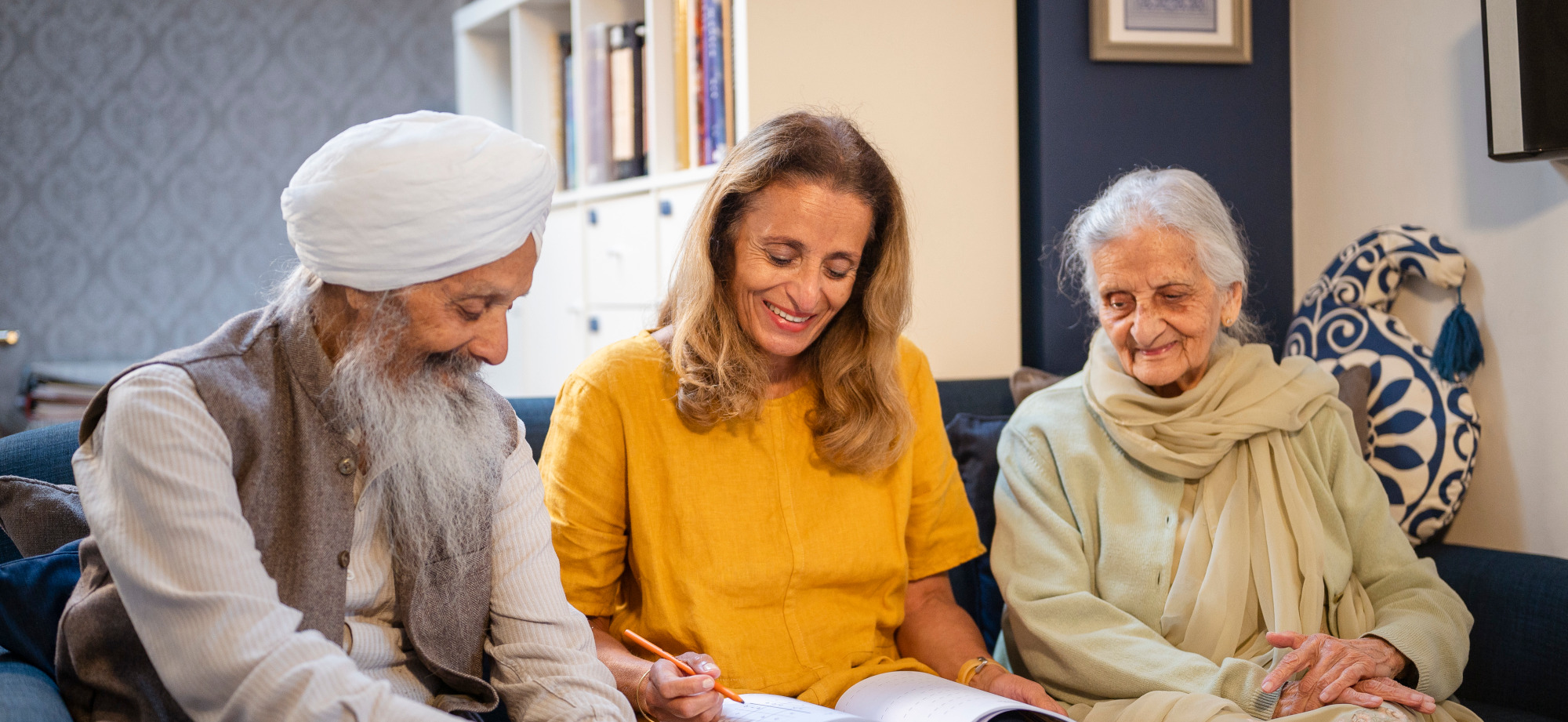
A photo of an elderly couple being guided through making meal choices by a carer

Resources | How to communicate the full value of Meals on Wheels

Developed by the Meals on Wheels UK project, University of Bristol.

Why this matters

Meals on Wheels is often described as a food service – but providers know that its value goes far beyond the meal itself.

Research and provider experience consistently show that Meals on Wheels supports people to remain independent at home, improves wellbeing, and provides reassurance to families.

However, this full value is not always well understood by those outside the sector.

This guide offers simple ways to communicate the broader impact of Meals on Wheels when speaking to families, professionals, commissioners, or local partners.

Meals on Wheels is more than a meal

Meals on Wheels services typically provide:

  • regular access to nutritious food
  • consistent social contact
  • informal wellbeing checks
  • early identification of concerns
  • reassurance for families and carers

As one provider described:

“For many people, this is not just a meal – it’s their main point of contact that day.”

What difference does the service make?

Evidence and provider experience show that Meals on Wheels supports:

  • independence and ability to remain at home
  • improved nutrition and regular eating
  • reduced social isolation
  • increased sense of safety and reassurance
  • earlier identification of changes in health or wellbeing

In many cases, this helps prevent escalation of need and reduces pressures on health and care services.

A simple way to describe the service 

Some providers find it helpful to use a short, clear message:

“Meals on Wheels is a preventative service – it helps people stay well, independent, and connected at home.”

Adapting your message for different audiences

Families and carers

Focus on reassurance and day-to-day impact:

  • “Someone will check in regularly”
  • “They’ll know your relative is eating properly”
  • “It provides peace of mind if you don’t live nearby”

Health and social care professionals

Focus on prevention and support:

  • “It helps people maintain independence at home”
  • “It supports safe discharge from hospital”
  • “It provides regular contact and monitoring”

Commissioners and policymakers

Focus on system impact:

  • “It is a preventative, community-based service”
  • “It helps delay or reduce the need for more intensive care”
  • “It supports people to remain in their own homes for longer”

Linking national evidence to local practice

You may wish to connect wider messages to your own service:

  • “We see that reflected here in our local area…”
  • “Demand for this type of support has been increasing…”
  • “This is the kind of support that helps people stay at home longer…”

Using evidence

Some providers find it helpful to include one simple, evidence-based point to support their message. For example:

  • the service supports independence and safety at home
  • it provides regular contact and reduces isolation
  • it contributes to people feeling more secure and supported

You do not need to use multiple examples – one clear point is often enough.

Final note

Every service is different, and you know your local context best. 

This guide is intended as a prompt. You may already be communicating the value of your service in ways that work well for your community. 

Further information on the benefits of Meals on Wheels is available here: https://www.bristol.ac.uk/policybristol/policy-briefings/care-meals-carers

Download this resource as a PDF

Help us to improve this resource

This guide has been developed based on ongoing engagement with Meals on Wheels providers, alongside insights from people who use the service and those who refer to it.

We recognise that many providers are already doing excellent work to communicate the value of Meals on Wheels in ways that resonate locally, whether that’s with families, health and care professionals, commissioners, or community partners.

We would really value your input to help ensure this resource reflects the realities of practice across the sector.

If you’ve found effective ways of explaining the value of your service, we’d be very interested to hear from you.

You might wish to share:

  • how you describe your service to families or carers
  • how you communicate impact to local authorities or commissioners
  • messages or approaches that have helped raise awareness locally
  • examples of what has worked well (or what hasn’t)

We are particularly interested in practical examples, including simple wording, short messages, or approaches that have helped others understand the broader value of Meals on Wheels.

Please share your ideas via our WhatsApp Community.  

Your input will help us continue to develop resources that are practical, relevant, and shaped by Meals on Wheels providers across the UK.

Has this resource been useful?

Please share your feedback using the form below


Attracting and retaining Meals on Wheels drivers and volunteers

A young woman delivering a bag of groceries to a senior adult woman

Resources | Attracting and retaining
Meals on Wheels drivers and volunteers

Developed by the Meals on Wheels UK project, University of Bristol.

Why this matters

Meals on Wheels services rely on a committed workforce, including both volunteers and paid delivery drivers, to operate effectively. Across the UK, many providers report ongoing challenges in:

  • recruiting new drivers
  • retaining staff and volunteers
  • maintaining reliable delivery capacity

At the same time, research and provider insights show that delivering Meals on Wheels can be a highly rewarding role, offering a strong sense of purpose and connection to the community. 

This guide brings together practical considerations and ideas to support providers in attracting and retaining drivers and volunteers.

What motivates people to get involved?

Research and provider experience suggest that people are often motivated by:

  • wanting to support others in their community
  • making a visible, practical difference day-to-day
  • building relationships with service users
  • having a flexible and meaningful role
  • feeling part of a trusted local service

For many drivers, the role offers something distinctive – combining practical support with regular human connection.

What makes the role distinctive?

Meals on Wheels delivery is not simply about transporting food. Drivers often:

  • become a regular point of contact for people using the service
  • notice changes in wellbeing or routine
  • provide reassurance through consistent, familiar visits
  • contribute to the overall safety and support of service users

This combination of practical delivery and social contact is often what makes the role meaningful and rewarding.

Making the role visible 

Some providers have found it helpful to:

  • clearly explain the role on their website
  • include photos or short descriptions of day-to-day delivery
  • highlight the impact of the role on people’s lives
  • share stories or experiences from existing drivers

Even simple, realistic descriptions can help potential applicants understand what the role involves.

Keeping the message simple

When promoting driver or volunteer roles, it can help to:

  • use clear, plain language
  • focus on what the role involves in practice
  • explain the time commitment and flexibility
  • outline any support or training provided

Short, clear messages are often more effective than detailed descriptions.

Reaching potential drivers

Providers use a range of approaches to reach potential drivers, including:

  • local community networks and word of mouth
  • social media (e.g. Facebook, local groups)
  • partnerships with local organisations
  • volunteer platforms or local councils
  • existing supporters and service users’ families

There is no single approach – different methods may work in different areas.

Supporting and retaining drivers

Retention is often as important as recruitment. Providers may wish to consider:

  • ensuring drivers feel valued and supported
  • providing clear communication and guidance
  • recognising contributions (formally or informally)
  • creating opportunities for feedback
  • maintaining flexibility where possible

A positive and supportive environment can make a significant difference.

Learning from others

Many providers have developed effective ways of:

  • describing roles
  • recruiting drivers
  • supporting volunteers and staff

We encourage providers to share examples of:

  • job descriptions
  • volunteer role outlines
  • recruitment approaches that have worked well

These can help build a shared understanding of what works in practice.

Further information

You may also find it helpful to explore how other organisations present volunteer opportunities.

For example, Meals on Wheels America provides examples of how roles are described and promoted in a different context:

https://www.mealsonwheelsamerica.org/volunteer/

Also, Meals on Wheels Australia have a dedicated page for volunteers, with a link to an interesting report:

https://mealsonwheels.org.au/get-involved/volunteer/

(Please note that service models and contexts differ, but some approaches to communication may be useful.)

Final note

There is no single model for recruiting and retaining drivers. Approaches will vary depending on local context, capacity, and the nature of the service.

This guide is intended as a starting point – many providers are already using effective and creative approaches.

Download this resource as a PDF

Help us to improve this resource

This guide has been developed based on research and ongoing engagement with Meals on Wheels providers, alongside insights into workforce and volunteer experiences.

We recognise that many providers have developed practical and effective ways of recruiting and supporting drivers and volunteers, often tailored to local needs and circumstances.

We would really value your input to help ensure this resource reflects what works in practice across the sector.

If you have experience in recruiting or retaining drivers or volunteers, we would be very interested to hear from you.

You might wish to share:

  • how you promote driver or volunteer roles
  • examples of job descriptions or role outlines
  • approaches that have helped attract applicants
  • how you support and retain drivers over time
  • any challenges you’ve faced and how you’ve addressed them

We are particularly interested in practical examples, including wording, approaches, or small changes that have made a difference.

Please share your ideas via our WhatsApp Community.  

Your input will help build a shared resource shaped by Meals on Wheels providers and support others facing similar challenges.

Has this resource been useful?

Please share your feedback using the form below


Fair Close Meals on Wheels service

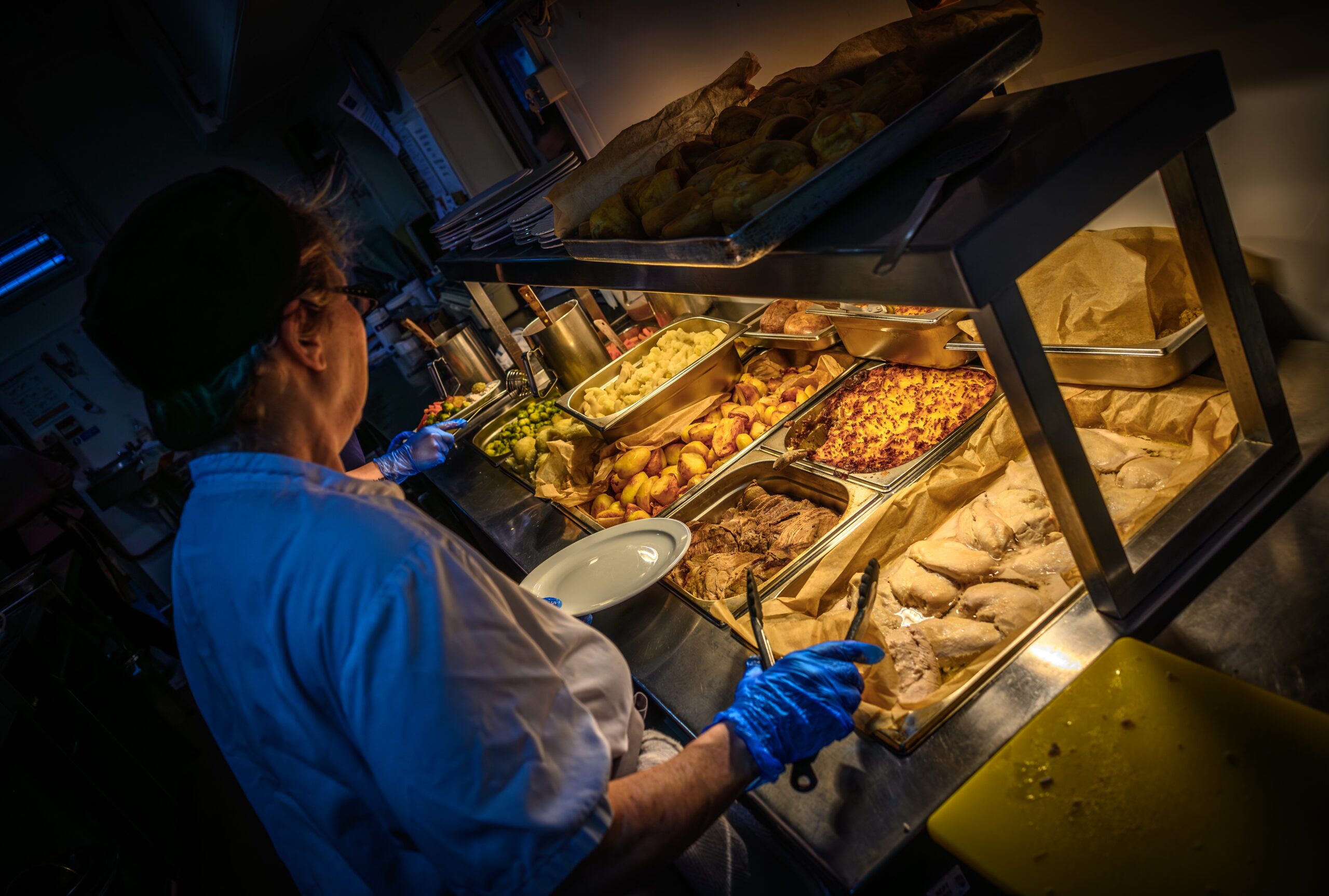
Fair Close's Kitchen

Provider in Focus | Fair Close Meals on Wheels service

Discussion took place on 30th April 2026

This month, we’re speaking with James Wilcox, Chief Executive of Age Concern Newbury, who run the Fair Close Centre, including a Meals on Wheels service operating in Newbury and Thatcham in West Berkshire.

Delivering freshly cooked meals six days a week to around 55 customers, the service combines a professional kitchen with a strong volunteer network. At its heart is something simple but powerful: food, connection, and care, delivered together.

Service Snapshot

Location: Newbury & Thatcham (West Berkshire)

Customers: ~55, many receiving meals daily

Delivery: 6 days a week, Saturday meal delivered on Friday

Team: 2 core staff + ~35 volunteers

Meals: Freshly cooked on site

“If Meals on Wheels didn’t exist, I think some people would go hungry and their families wouldn’t know about it… a lot of people would go into a care home sooner… And I think quite a lot of people would just find themselves getting out of the habit of eating. I don’t think anyone would be better. I think it’s a lifeline.” 

Image: Fair Close’s Kitchen

About the service

The Fair Close Centre supports mainly older adults living independently, often in their 80s, many of whom live alone. While meals are central, the service plays a wider role for both individuals and their families. 

As James explains, families are often the ones arranging support.

For those receiving the service, the impact is immediate. Feedback is often simple but telling: people are grateful, and over time, the service becomes part of their routine and wellbeing. 


“They want the reassurance to know that their parents are eating properly and that they eat every day.”

What makes this service different?

For James, two things set the Fair Close Meals on Wheels service apart: human connection and food quality.

“It’s not like an Uber delivery driver or a takeaway – it’s a DBS-checked volunteer, nearly always delivering to someone they know. So there’s a relationship.”

This relationship also brings an important safeguarding role, with volunteers able to notice changes or concerns. 

Alongside this, the service focuses on freshly cooked meals prepared on site:

“Being freshly cooked… the nutritional value over and above the microwave meal is something I want to emphasise. You can taste the difference.”

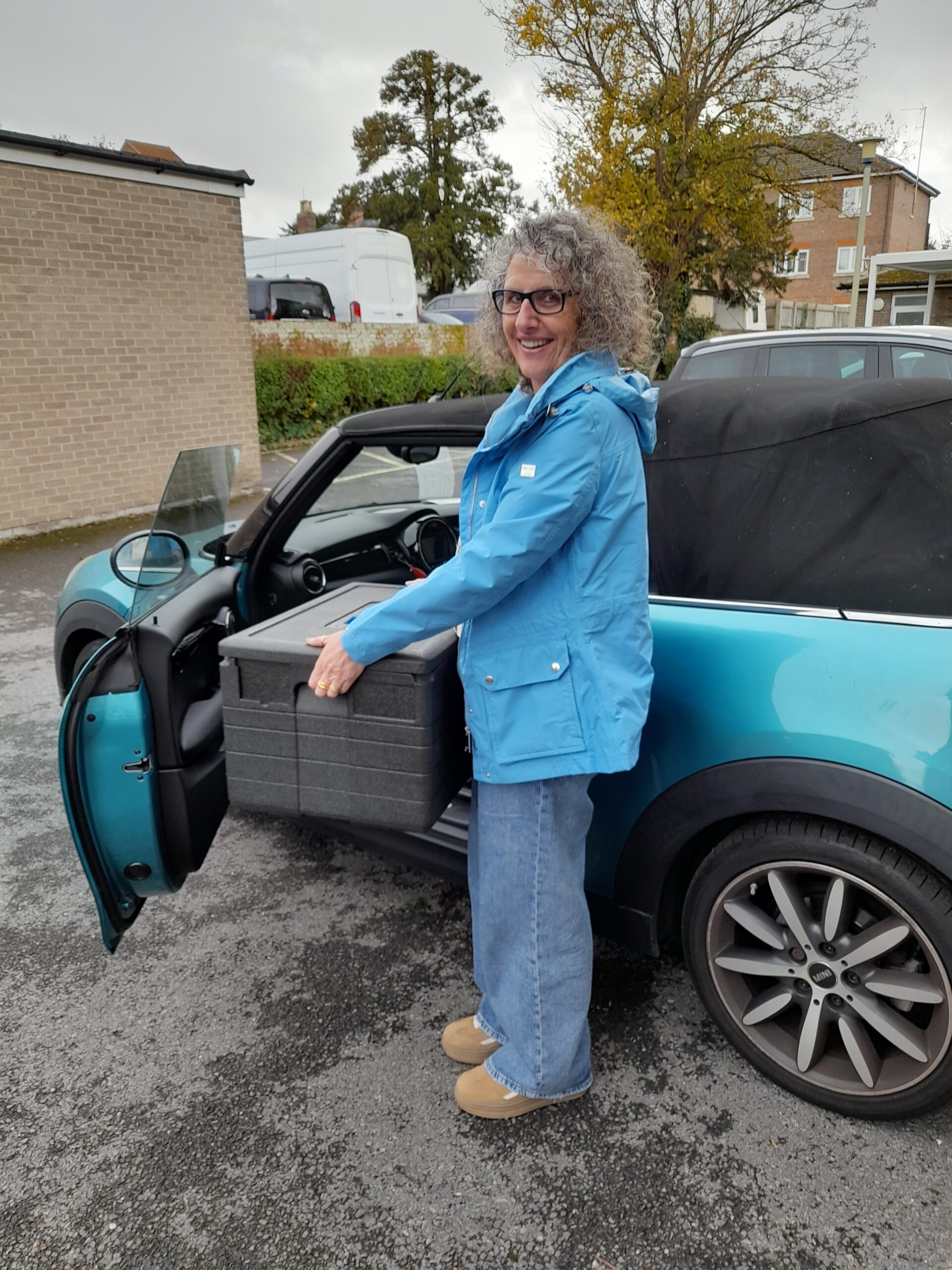
Preparing for the day’s Meals on Wheels deliveries at Fair Close

Preparing for the day’s Meals on Wheels deliveries at Fair Close

What’s working well in practice?

Freshly cooked meals at a manageable scale

The team has retained a model that allows them to cook on site while maintaining quality and flexibility

Strong volunteer network

Around 35 volunteers deliver meals, often building relationships with the people they support

Tight control of food costs

Despite rising prices, the service has maintained nutritional quality without compromising standards

Integrated systems

A CRM system linked to invoicing helps manage customer information, billing, and allergen tracking more efficiently

Challenges and reality

Like many services, Fair Close faces ongoing pressures – particularly around sustainability and demand. Because they support older people, there is natural turnover, with individuals moving into care or experiencing declining health. This makes outreach and awareness an ongoing priority. 

James also highlights the importance of marketing – particularly reaching families, who often play a key role in decisions about care.


“There’s a constant need to find new customers.”

“The Meals on Wheels offer is not outdated. I think it needs to be promoted as freshly cooked food delivered by friendly people.”  

Looking ahead

Despite challenges, James is optimistic about the future and sees clear opportunities to grow. 

One key area is developing a home-from-hospital support offer, helping people recover at home and avoid readmission.

“There is real scope locally to develop a home-from-hospital package… we’d be helping more people who really need the help to get back on their feet so they don’t then relapse and go back into hospital.” 

The ambition is to grow from around 55 to 75-100 meals per day, while maintaining quality and connection. 

James also reflects more broadly on the future of Meals on Wheels:


“I believe in Meals on Wheels… it shouldn’t be seen as something outdated, but something that’s right for the next generation too.” 

Why it matters

For James, Meals on Wheels plays a crucial role in the wider health and care system. But this isn’t always fully recognised. 

“The virtue… the health benefits of Meals on Wheels come full circle over time. If decisions are just driven by cost, it misses the point, because nutrition and wellbeing contribute to the health economy… it needs to be much more holistic and think about the whole system.” 

He points to the need for stronger evidence to support decision-making: 

“We need the evidence and the data to make the case for change. The social value metrics and the economic metrics. And when that case is made, I think we’ll be able to grow Meals on Wheels across the country. I believe it’s possible.”

Working together as a sector

A recurring theme throughout our conversation was the importance of collaboration. 

“There’s every opportunity for us to be part of the Meals on Wheels community across the country. That’s what’s so refreshing about the Meals on Wheels UK project, is we’re not alone. We have a common purpose.” 

James is clear that sharing knowledge across Meals on Wheels providers is essential – from operational tools to approaches to scaling and partnerships.

“Learning about automation, learning about what others are doing, learning about how to scale, sharing data across a wider data set, all these things are great for all of us. And ultimately, we’ll be able to support more people, and better, collectively.”

He adds: 

“If we’re all prepared to share that knowledge… and we do see that we’re in it together as people across the country supporting an ageing population, I think there’s a lot to be learned. The Meals on Wheels proposition can grow across the country. To do that, we’ve got to work together.” 

This reflects a growing recognition that strengthening Meals on Wheels across the UK depends on learning from each other and working together.

Advice for other providers

For people considering developing a new Meals on Wheels service, James advises: 

“Plan it well – and go and talk to someone who’s done it.”

And if an existing Meals on Wheels service came to James for advice, he emphasises being open to learning: 

“Let me come and see you – I might learn something too.”

James’ question to other Meals on Wheels providers

“How have other providers convinced their local authorities to work with them to develop a home-from-hospital Meals on Wheels support package?”

Learn more about the Fair Close Centre’s Meals on Wheels service
Contact: ldavies@fairclosecentre.org | 01635 40488

Do you run a Meals on Wheels service and have thoughts or experience to share? Join the conversation with other Meals on Wheels providers via our WhatsApp Community.

Can you give us some feedback please?