
Accessibility Tools

Provider in Focus | Age UK Wiltshire Wellbeing Checks with Meals

Discussion took place on 30th April 2026

This month, we’re speaking with Oliver Moody, Senior Commercial Manager at Age UK Wiltshire, which runs the Wellbeing Checks with Meals service, operating in the county of Wiltshire.

Delivering around 225 meals a day across a large and largely rural county, the service combines hot meal delivery with regular wellbeing checks – supporting people to remain independent at home while providing reassurance to families.

As Oliver explains, the service is about far more than food:

“We call ourselves a Wellbeing Checks with Meals service… it’s that communication line between the clients and their families.”

With drivers returning to the same routes each day, relationships build over time, allowing small changes in behaviour or wellbeing to be noticed early.

What makes this service different

At its core, the Age UK Wiltshire service plays a vital role in supporting independence and preventing escalation of need.

Oliver reflects:

“With our 350 clients… if we were to shut tomorrow, I would say 200 clients would struggle to feed themselves… and I don’t know who would step into that void.”
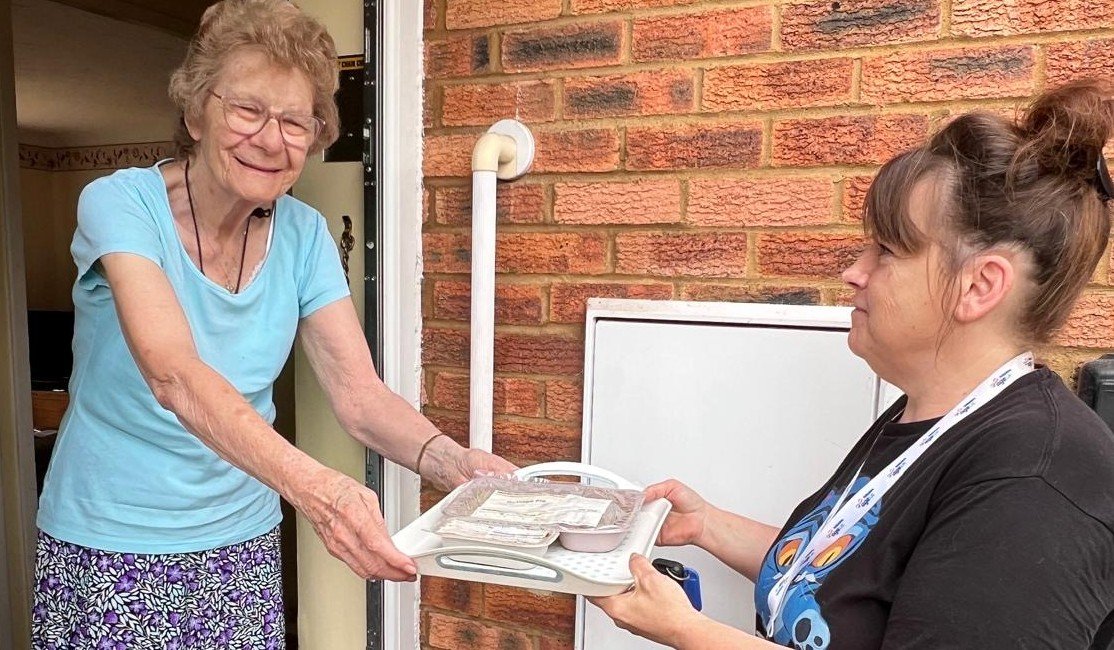
“I think if you look up and down the country, how many Meals on Wheels services are being shut… and with the state of the care system at the moment, Meals on Wheels are really vital. To allow people to stay in their own homes for as long as possible, and to take the pressure off of care homes and hospitals… I think it’s something that needs a bit of a shift in thought.” 

Image: A Wellbeing Checks with Meals delivery to a customer at home

A service built on relationships

Most people using the service are referred by family members or support workers, often when additional support is needed to remain safely at home. For many, the value of the service lies in consistency and trust. The regular contact can also make a real difference – from identifying early health concerns to responding in emergencies.

Oliver also shares:

“We ask for a minimum commitment of three days a week. We do understand that not everyone needs a meal every day, but we feel that delivering the service once or twice a week doesn’t give us enough… we need that regular contact to build relationships and spot the signs.”


“We’ve had clients where we’ve found them on the floor… we had a lady who had had a stroke and we called an ambulance… they told us that if it had been another few hours, she might not have survived.”

For families, this creates peace of mind, especially when many of them live far away.
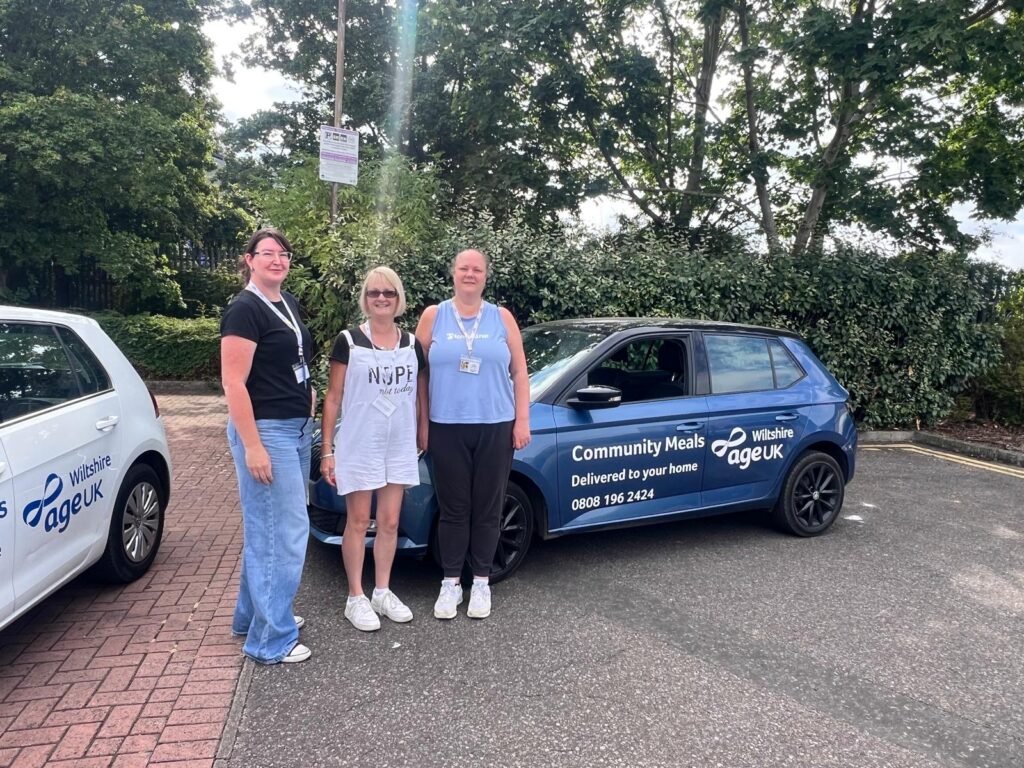
Age UK Wiltshire Wellbeing Checks with Meals team
Members of the Age UK Wiltshire Wellbeing Checks with Meals team
What makes the service work in practice

Running a large Meals on Wheels service involves constant coordination, adaptation, and problem-solving.

At Age UK Wiltshire, much of this is still managed through carefully developed internal systems:

  • Daily route planning across 14 vehicles
  • Managing around 350 clients
  • Tracking of meals, preferences, and changes
  • Complex invoicing based on individual orders

Much of this work is done using spreadsheets and evolving processes:

“It’s taken us a long time to get it right… we constantly tweak and improve things. We’re trying to automate that a little bit.”

Clear communication is essential – both within the team and with clients and families.

“It’s all about being organised and having that clear line of communication… otherwise you end up wasting food or missing things.”


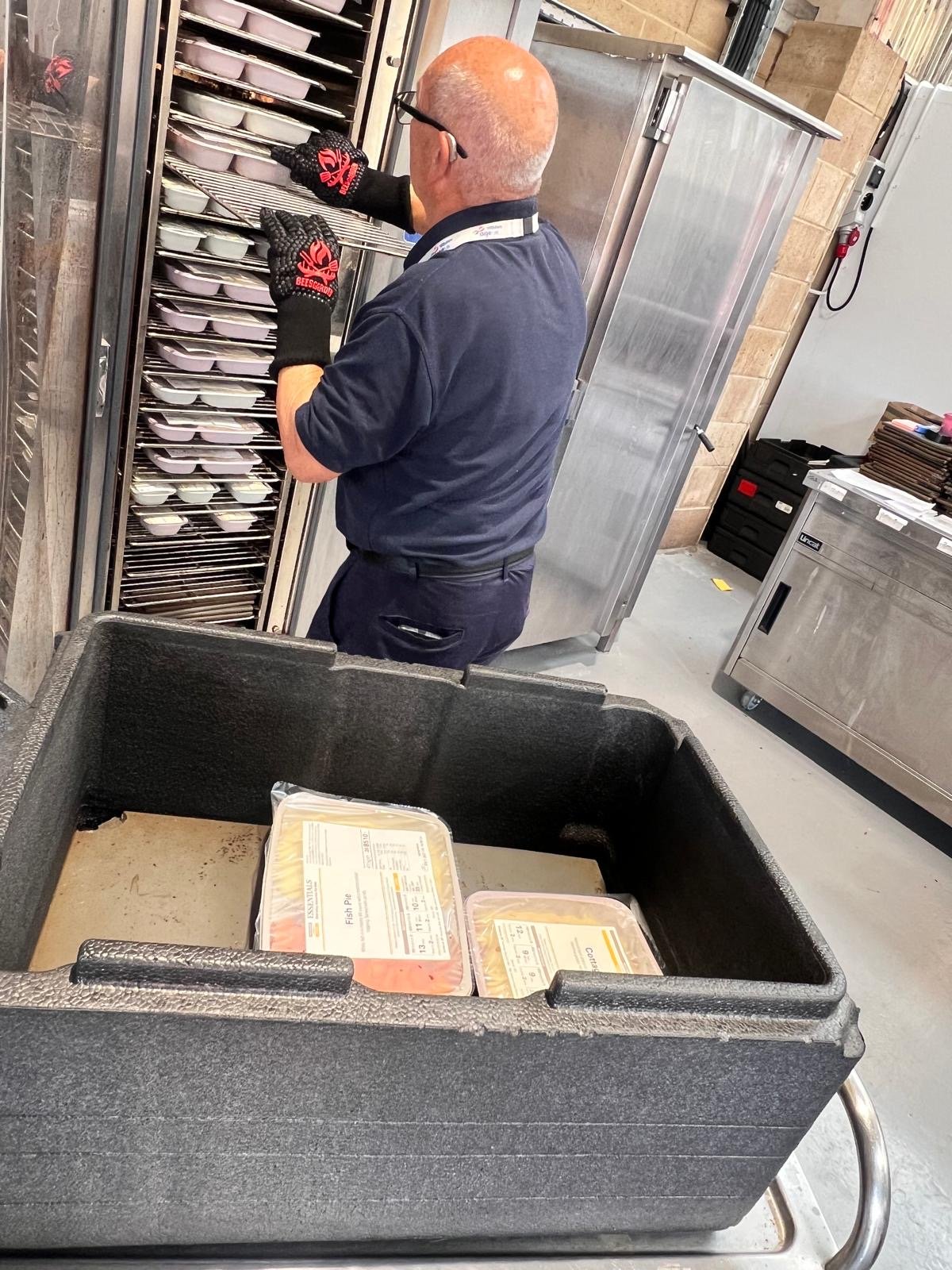
A man prepares hot meals for the delivery round

Hot meals being prepared for the delivery rounds at Age UK Wiltshire

Behind the scenes: the realities of delivery

Our discussion highlights the often unseen complexity of running a service at scale.

Challenges include:

  • Covering large rural distances
  • Balancing financially viable and loss-making routes
  • Managing staffing flexibility
  • Responding to rising costs and changing supply chains

“We’ve had to drive 70 miles to deliver one meal… because we knew that person wouldn’t eat otherwise.”

Some routes, particularly in rural areas, are not financially sustainable on their own:

“There are certain routes that are kind of loss leaders… but you can’t afford not to operate in those areas. But it gets to a point where the amount of money we lose to operate in an area that is technically outside of our patch is so huge that it’s a drain on us.”

Despite this, the service continues to prioritise coverage – even where it is difficult.

There is also a strong commitment to reliability:

“You can’t ring 20 people and say you’re not getting lunch today… we go out in all weathers.”

Adapting in practice

Like many providers, the Wellbeing Checks with Meals service is constantly evolving: from improving processes to exploring new ways to remain sustainable. 

This includes:

  • Trialling small additional services (e.g., basic grocery add-ons)
  • Refining training and onboarding for drivers
  • Improving internal systems and automation
  • Planning for expansion into new areas

At the same time, external changes can have a significant impact. For example, changes in supplier packaging led to:

  • Reduced oven capacity
  • Increased labour time
  • Higher costs

“We lost 40% of our oven capacity overnight… we’ve had to change a lot of our processes just to keep going.”

Challenges across the wider system

Oliver also highlights the role Meals on Wheels could play in supporting the wider health and care system, particularly around hospital discharge.

There is clear potential, but also barriers:

  • Lack of awareness among professionals
  • Limited integration into discharge pathways
  • Funding challenges for short-term support

“Meals on Wheels could be a real key part of helping get people out of hospital. Quite often those discharges don’t happen because people are ready to go home, but there’s not the capacity in place… So I think a closer relationship with discharge teams would be really good.” 

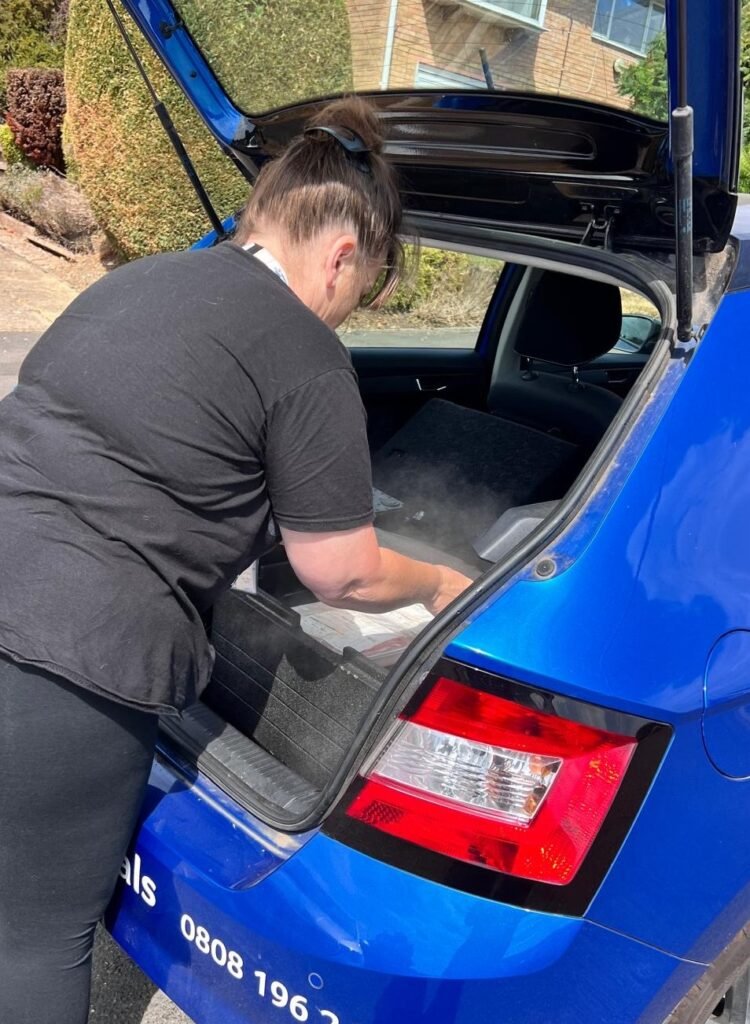
A woman loading a car with meals, ready for the delivery round

Getting ready for the delivery round at Age UK Wiltshire

Looking ahead

As the service continues to grow, the focus is on sustainability, visibility, and reaching more people who could benefit from support.

Recent changes, including rising costs, shifts in supply chains, and the move to new premises, mean the team is having to rethink how the service operates and how it can continue to expand.

There are also plans to increase visibility locally, particularly in areas where awareness of the service remains low, despite clear need.

As Oliver reflects, growth isn’t just about scale – it’s about finding ways to make the service viable in the long term while continuing to meet increasing demand:

“We know where we are at the moment, and we know that we can’t continue to sustain things at this level.”

At the same time, there are opportunities to expand into new areas and reach more people, particularly in parts of the county where demand is currently unmet.

Working together as a sector

A recurring theme throughout our conversation was the need for shared learning and practical solutions across providers.

From route planning to invoicing systems, many challenges are not unique – and there is value in learning from others.

“It would be good to know how other people deal with things like invoicing and non-payment… because it has a real impact.”

Advice for other providers

For people considering developing a new Meals on Wheels service, Oliver advises:

“It will be tough in the beginning… but if you persist and get your product right, it can be sustainable. And I would say you need to set yourself apart. You need to have that unique selling point.”

And if an existing Meals on Wheels service came to Oliver for advice, he emphasises the need for flexibility:

“You need to listen to your clients… and be prepared to adapt what you offer.”

Oliver’s question to other Meals on Wheels providers

“For providers who don’t rely on paperwork – how are you managing things digitally?
And for those who charge for services, how do you handle invoicing and non-payment?
”

Learn more about the Age UK WIltshire Wellbeing Checks with Meals service
Contact: wellbeingcheckswithmeals@ageukwiltshire.org.uk | 01793 279 606

Do you run a Meals on Wheels service and have thoughts or experience to share? Join the conversation with other Meals on Wheels providers via our WhatsApp Community.

Can you give us some feedback please?